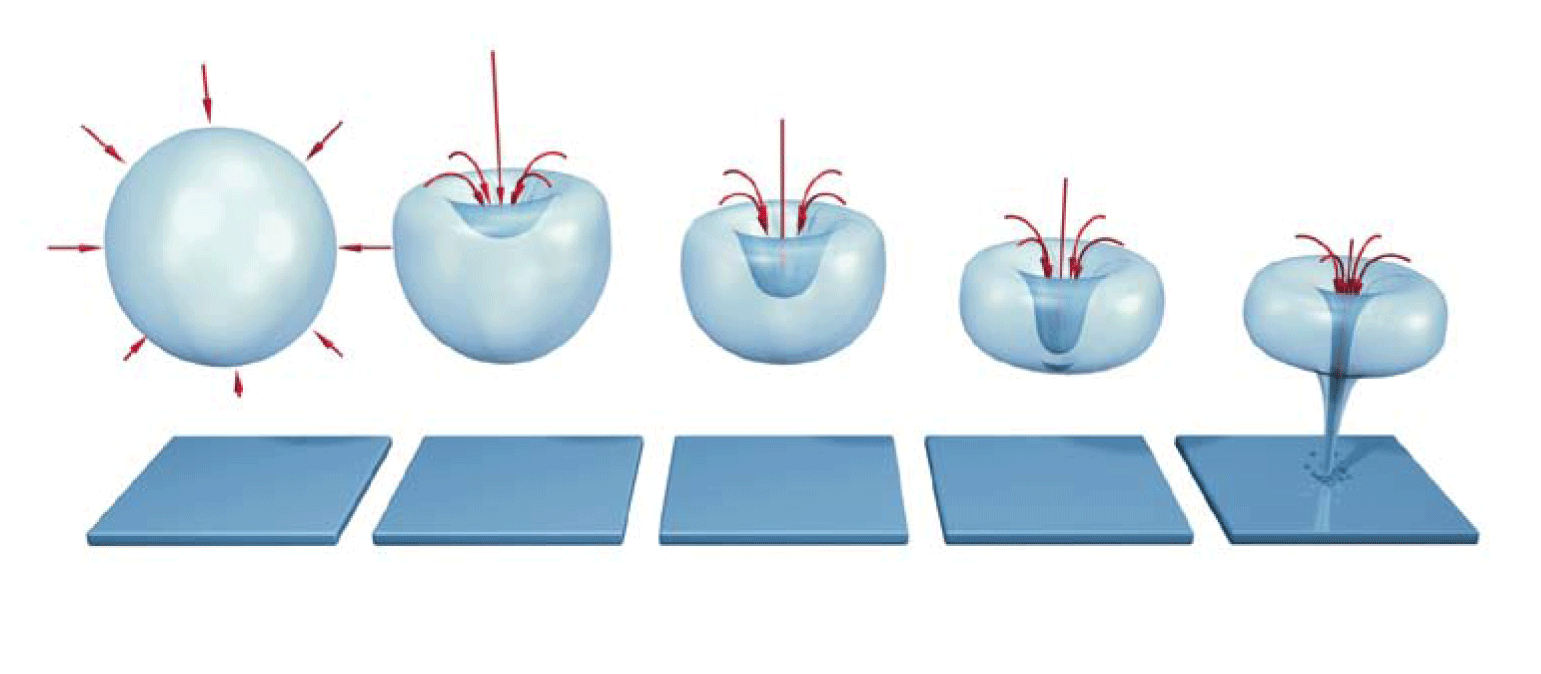
a toroidal vortex.
Showing posts with label zen. Show all posts
Showing posts with label zen. Show all posts
08 June 2014


03 May 2014
because they have always already occurred
the present is always already a state of anticipation.
"so, how is it that things happen? aren't we always just waiting for the--"
because they have always already occurred.
temptorus
zeno,
st. augustine,
bergson.
the present is a cavitation bubble.
it makes real and perceptible, anticipation,
in the manner that water moves out of the way ahead of something Other moving through its space.
 |
| http://eswt.net/wp-content/uploads/2011/10/cavitation.gif |
antici
17 April 2013
Mad Rush
I am pleased to share the work of talented pianist and eMedia artist, Alex Farren, who is graduating from our program this semester. This video pairs stunning time-lapse footage and an interview at a dharma center with his musical performance of a piece Philip Glass composed for the Dalai Lama. It's like a mini-Koyaanisqatsi, only beter.
30 January 2013
#noyolo
I've been publishing a new photo series on Facebook since closing CCPCtW that picks up some of the theme (and at least a portion of the subject matter) of that early series. It was prompted by my recent sudden reunion with an old friend who I've missed quite a lot.
#noyolo borrows the trope of the ubiquitous Internet cat photo and employs it in a kind of spiritual subterfuge, smuggling buddhist concepts into the cloud through this common image. The photos attempt to convey the bussho (inherent, original buddha-nature) of my 14-year-old tortoiseshell long-hair, Trixie. Upon coming back into my care (or I into hers), she immediately grew accustomed to my nightly practice of writing in bed, typing away at my laptop, propped up on elbows, while stretched out on my belly.
Recognizing this ritual, she has incorporated her own practice into it, a kitten-zazen, if you will. She will stand to my right on the bed, waiting for me to clear a path of sufficient space between myself and my laptop so that she can walk to the left side. There she waits for me to remove my left arm from the position that allows me to type and stretch it out on the bed, where she will plop herself down across the arm. I then type with my right hand as she sits, in her catness, or, sometimes, turns to her side and uses the arm to prop up her head.
This happens almost invariably every night, in the same spot, and with her at least starting in the same position each time. As soon as I recognized this corresponding ritual, I began to document it with my free hand using Instagram and posting the images simultaneously to Facebook. To some images, I add a buddhist-themed caption, but typically I allow the image to be read on its own. In many, the laptop or some portion of it has also been captured, marrying both of our rituals in the images.
I have chosen the title #noyolo because it is multi-valent in relationship to the images. It is a hashtag, used to associate a topic or keyword (or several) with a social media post. This allows, in many social networks, for users to search the posts for that keyword. The phrasing is an appropriation and a turning back on itself of an unfortunately popular current homophobic phrase (and frequent hashtag): nohomo. It's an abbreviated interjection used to disavow same-sex attraction when engaging in activities that might stereotypically draw speculation on one's sexual orientation, such as hugging someone of the same sex. yolo is an acronym, with cache in our current culture, for "you only live once." noyolo, then, is a play on this indicating that you don't only live once, but instead you live in a cycle of rebirths, either literal or figurative. noyolo seems especially fitting to me when referring to a cat, with its fabled nine lives.
Trixie and I have been reunited because she is nearing the end of this particular life, and as its close draws near, she has so much to teach and such little time in which to do it.
 |
| Trixie, demonstrating kitten-zazen. |
#noyolo borrows the trope of the ubiquitous Internet cat photo and employs it in a kind of spiritual subterfuge, smuggling buddhist concepts into the cloud through this common image. The photos attempt to convey the bussho (inherent, original buddha-nature) of my 14-year-old tortoiseshell long-hair, Trixie. Upon coming back into my care (or I into hers), she immediately grew accustomed to my nightly practice of writing in bed, typing away at my laptop, propped up on elbows, while stretched out on my belly.
Recognizing this ritual, she has incorporated her own practice into it, a kitten-zazen, if you will. She will stand to my right on the bed, waiting for me to clear a path of sufficient space between myself and my laptop so that she can walk to the left side. There she waits for me to remove my left arm from the position that allows me to type and stretch it out on the bed, where she will plop herself down across the arm. I then type with my right hand as she sits, in her catness, or, sometimes, turns to her side and uses the arm to prop up her head.
This happens almost invariably every night, in the same spot, and with her at least starting in the same position each time. As soon as I recognized this corresponding ritual, I began to document it with my free hand using Instagram and posting the images simultaneously to Facebook. To some images, I add a buddhist-themed caption, but typically I allow the image to be read on its own. In many, the laptop or some portion of it has also been captured, marrying both of our rituals in the images.
I have chosen the title #noyolo because it is multi-valent in relationship to the images. It is a hashtag, used to associate a topic or keyword (or several) with a social media post. This allows, in many social networks, for users to search the posts for that keyword. The phrasing is an appropriation and a turning back on itself of an unfortunately popular current homophobic phrase (and frequent hashtag): nohomo. It's an abbreviated interjection used to disavow same-sex attraction when engaging in activities that might stereotypically draw speculation on one's sexual orientation, such as hugging someone of the same sex. yolo is an acronym, with cache in our current culture, for "you only live once." noyolo, then, is a play on this indicating that you don't only live once, but instead you live in a cycle of rebirths, either literal or figurative. noyolo seems especially fitting to me when referring to a cat, with its fabled nine lives.
Trixie and I have been reunited because she is nearing the end of this particular life, and as its close draws near, she has so much to teach and such little time in which to do it.
27 January 2013
Chuang Tzŭ and King James: Scriptural Smackdown or Textual Tag-Team?
In reading Chuang Tzŭ, I ran across several passages that brought to mind specific verses from the Bible. These are some of the points of comparative doctrine that emerged.
21 If a man therefore purge himself from these, he shall be a vessel unto honour, sanctified, and meet for the master's use, prepared unto every good work.
4 Whosoever therefore shall humble himself as this little child, the same is greatest in the kingdom of heaven.
5 And whoso shall receive one such little child in my name receiveth me.
 |
| Photo: Reuters |
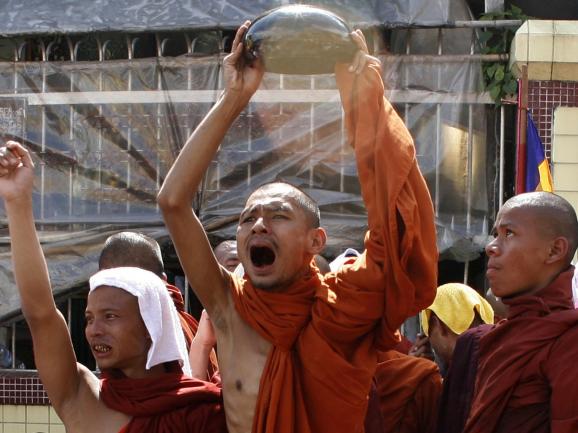
AN EMPTY VESSEL
2 Timothy 2:20-21 (King James Version)
20 But in a great house there are not only vessels of gold and of silver, but also of wood and of earth; and some to honour, and some to dishonour.21 If a man therefore purge himself from these, he shall be a vessel unto honour, sanctified, and meet for the master's use, prepared unto every good work.
Chuang Tzŭ, Chapter 4: "The Human World," p.80 (Fung Yu-Lan, Translator)
The function of the ear ends with hearing; that of the mind, with symbols or ideas. But the spirit is an emptiness ready to receive all things. Tao abides in the emptiness; the emptiness is the fast of mind.BE AS CHILDREN
Matthew 18:3-5 (King James Version)
3 And said, Verily I say unto you, Except ye be converted, and become as little children, ye shall not enter into the kingdom of heaven.4 Whosoever therefore shall humble himself as this little child, the same is greatest in the kingdom of heaven.
5 And whoso shall receive one such little child in my name receiveth me.
Chuang Tzŭ, Chapter 4: "The Human World," p.86 (Fung Yu-Lan, Translator)
If the son of the prince should act as if he were a child, you also should act as if you were a child. If he should cast aside all differences, you should do the same. If he should cast aside all distinctions, you also should do the same. Then you can lead him to innocence.
19 And out of the ground the LORD God formed every beast of the field, and every fowl of the air; and brought them unto Adam to see what he would call them: and whatsoever Adam called every living creature, that was the name thereof.
4 And the serpent said unto the woman, Ye shall not surely die:
5 For God doth know that in the day ye eat thereof, then your eyes shall be opened, and ye shall be as gods, knowing good and evil.
6 And when the woman saw that the tree was good for food, and that it was pleasant to the eyes, and a tree to be desired to make one wise, she took of the fruit thereof, and did eat, and gave also unto her husband with her; and he did eat.
7 And the eyes of them both were opened, and they knew that they were naked; and they sewed fig leaves together, and made themselves aprons.
The knowledge of the ancients was perfect. How perfect? At first, they did not yet know that there were things. This is the most perfect knowledge; nothing can be added. Next, they knew that there were things, but did not yet make distinctions between them. Next they made distinctions between them, but they did not yet pass judgments upon them. When judgments were passed, Tao was destroyed. With the destruction of Tao, individual preferences came into being.
KNOWLEDGE, DISTINCTION, JUDGMENT
Genesis 2:18-9 (King James Version)
18 And the LORD God said, It is not good that the man should be alone; I will make him an help meet for him.19 And out of the ground the LORD God formed every beast of the field, and every fowl of the air; and brought them unto Adam to see what he would call them: and whatsoever Adam called every living creature, that was the name thereof.
Genesis 3:3-7 (King James Version)
3 But of the fruit of the tree which is in the midst of the garden, God hath said, Ye shall not eat of it, neither shall ye touch it, lest ye die.4 And the serpent said unto the woman, Ye shall not surely die:
5 For God doth know that in the day ye eat thereof, then your eyes shall be opened, and ye shall be as gods, knowing good and evil.
6 And when the woman saw that the tree was good for food, and that it was pleasant to the eyes, and a tree to be desired to make one wise, she took of the fruit thereof, and did eat, and gave also unto her husband with her; and he did eat.
7 And the eyes of them both were opened, and they knew that they were naked; and they sewed fig leaves together, and made themselves aprons.
Chuang Tzŭ, Chapter 2: "The Equality of Things and Opinions," p.53 (Fung Yu-Lan, Translator)
Subscribe to:
Posts (Atom)